Flake (chip) floors
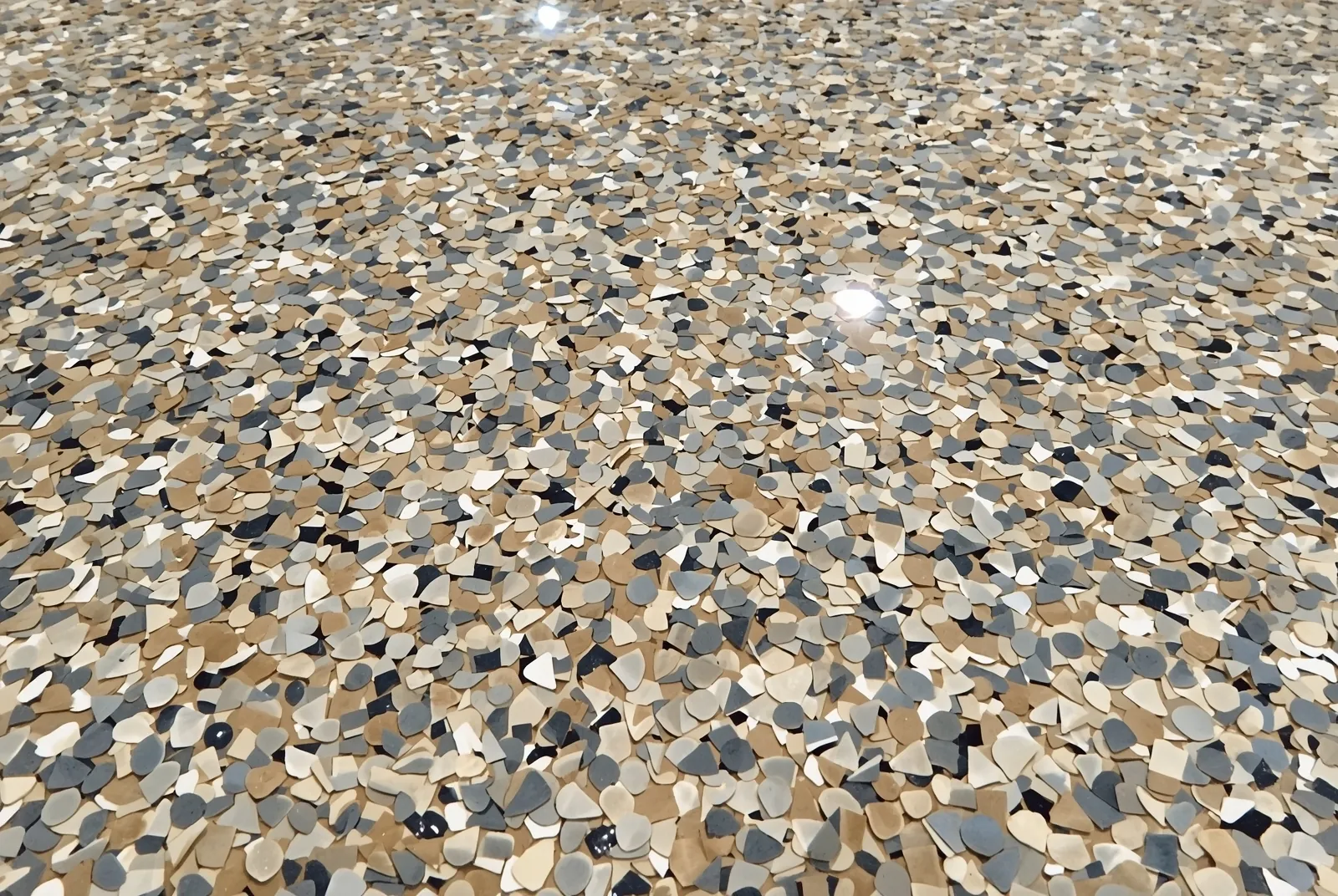
Colored vinyl flakes are broadcast into a wet base coat until the floor is fully covered, then scraped and sealed with a clear topcoat. The result is textured, forgiving and very good at hiding sand, dust and small marks.
Best for: home garages, carports, laundry rooms, workshops, storage under elevated homes.
Popular here: sandy beige and grey blends, “shoreline” mixes with a fleck of blue, and darker granite tones for workshops.
Metallic epoxy
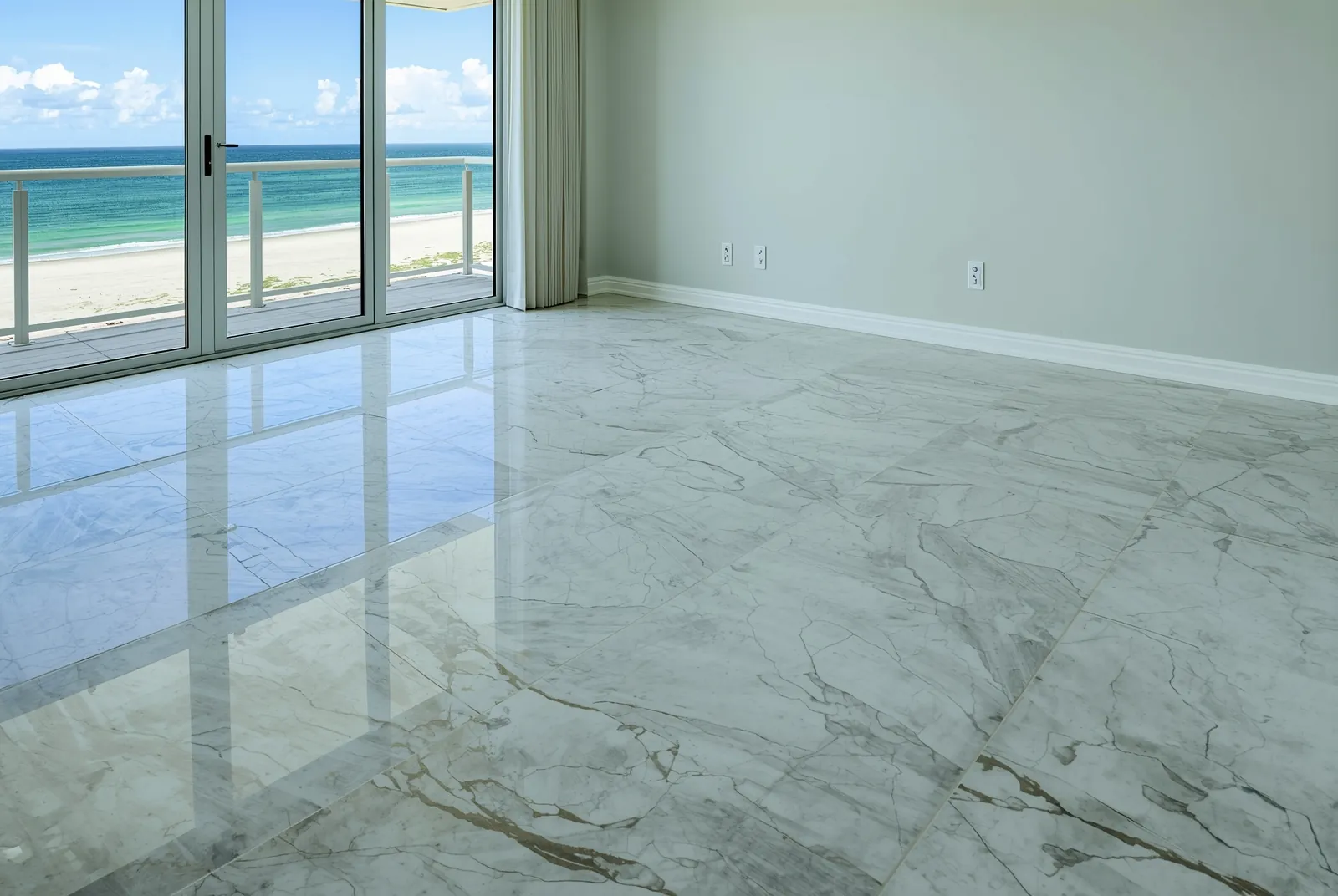
Metallic pigments are mixed into a clear epoxy and worked by hand as it levels, creating movement and depth that looks a little like polished stone or water. No two floors are the same.
Best for: condo and home interiors, showrooms, salons, offices.
Good to know: metallic floors are glossy and show scratches more than flake. We finish them with a tough topcoat and recommend felt pads and mats at entries.
Solid color
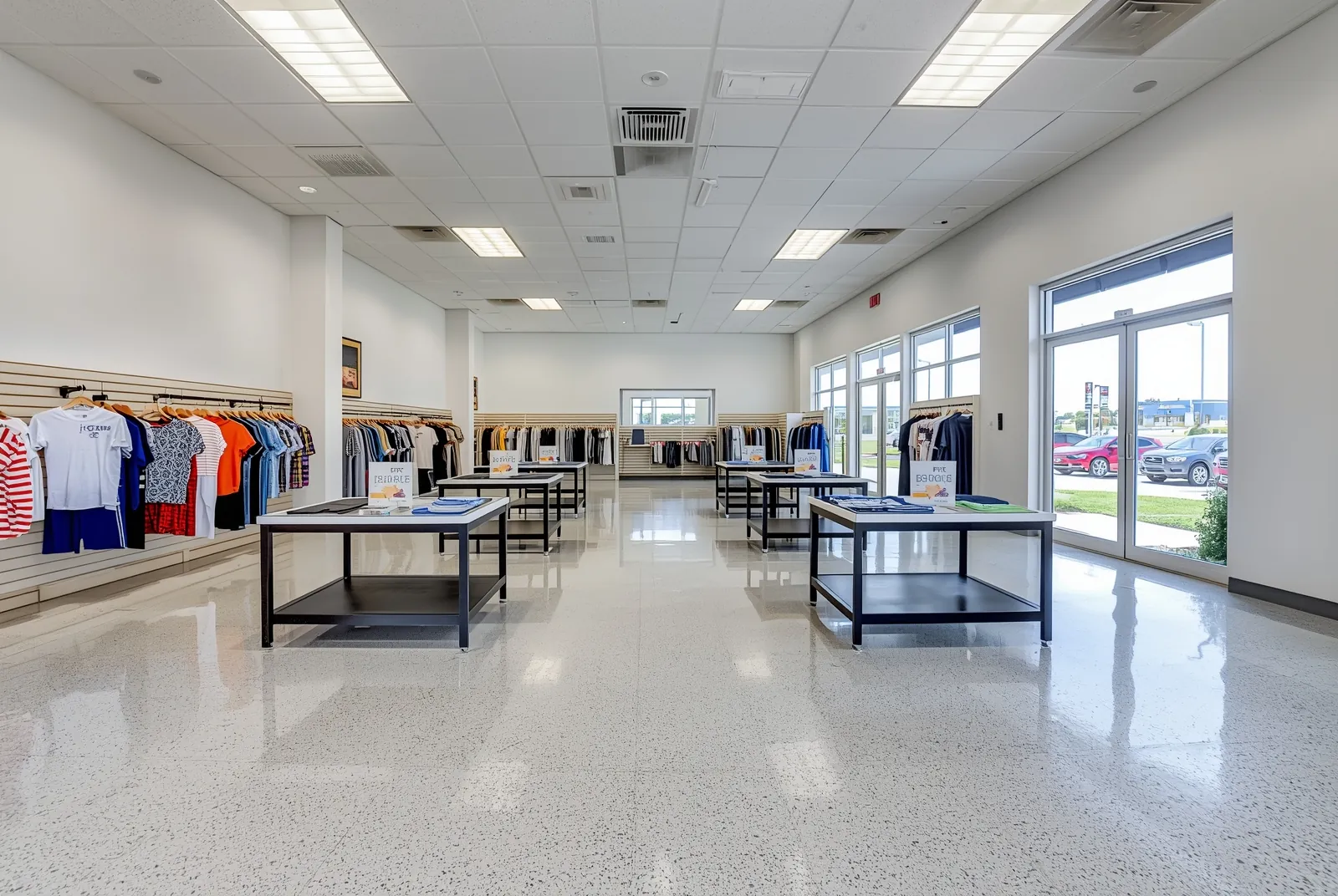
One or two coats of pigmented epoxy with a protective topcoat. Clean, bright and economical — and the easiest base for line striping.
Best for: warehouses, shops, hangars, storage, gyms and budget-friendly garages.
Good to know: solid colors show dust and sand more than flake. Mid-greys are the most forgiving.
Quartz broadcast
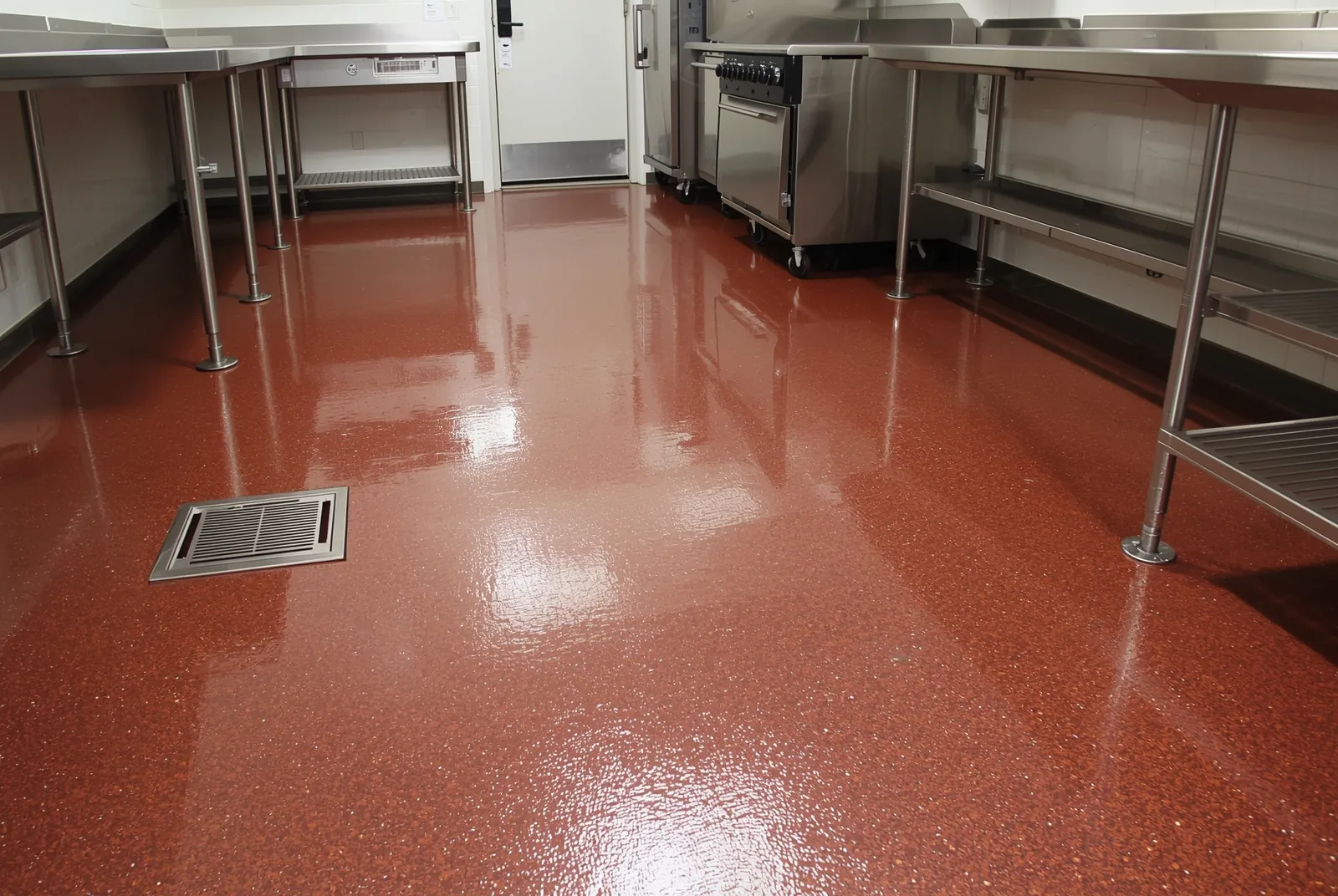
Colored quartz sand is broadcast into the resin in one or two layers and sealed. The system is thick, textured and very hard-wearing, and it can run up the wall as a seamless cove base.
Best for: restaurant kitchens, restrooms, breweries, wash bays and anywhere that gets wet.
Gloss, satin and texture
Most systems can be finished glossy or satin. Gloss is brighter and easier to clean; satin hides scratches and footprints better. Texture is a separate choice — we can add grip to any finish. Bring your questions to the free site visit, where we show physical samples in your space.
Next: epoxy vs. polyaspartic topcoats · free estimate · back to the homepage.